

Interview: Lyn Hawks
I like to start the new year by writing down my creative goals. Since I’m a big dreamer with lots of ideas, if I don’t slow down and really think about where I want to focus my energy, my list of goals can start to feel more like a chaotic to-do list.
As I’m sure we’ve all heard, in order to be attainable, goals should be SMART: specific, measurable, attainable, relevant, and time-based. Crafting a time-based writing goal can be tough for me. In the rush of positive energy that comes with considering new projects, I can be tempted to don time-blurring, rose-colored glasses and say yes to too many things—including too many of my own projects!
Following poet and author Laura Shovan’s example, I decided to keep my goals simple to ensure that they’d be attainable. Specifically, I committed to submitting at least one piece a month (be it a poem, a craft article, or a short story). I also committed to consuming at last one craft-based book, article, or podcast a month. Small goals, and ones easily met. And more often than not, I exceeded my goals, submitting multiple pieces and reading more craft-based content each month.
For the first time in a long time, I’m ending 2025 feeling content with what I’ve accomplished rather than berating myself for not having done more. In granting myself more kindness, I also have the space to feel more gratitude for my craft as a joyful, centering practice.
Start with the right framework, and you CAN achieve your creative goals. By using SMART goals, yes, but a huge part of reaching your goals also depends on your mindset. Your personal beliefs about the value of your time and of your work, the habits you need to form (or break)—of course. But I’m thinking about something even more specific: how you react to disappointments and setbacks.
That’s why this month, I’m talking to Lyn Fairchild Hawks. I met Lyn in our first semester at VCFA, and I’ve been grateful for her candor, positivity, and friendship ever since.
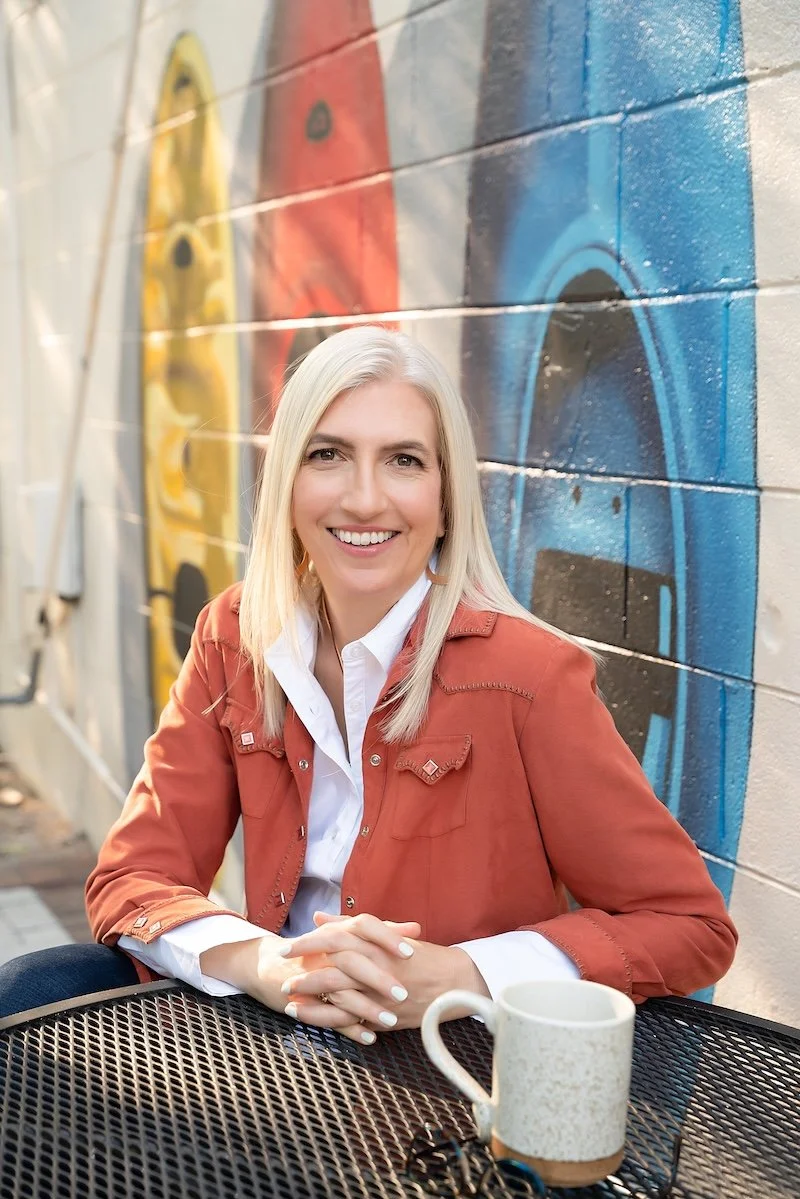
Image of Lyn Hawks, author, educator, and writing coach
As a YA author, teacher, and college essay consultant, Lyn has loads of experience across several writing-related industries. In her publishing career, she’s independently released four works of fiction—two YA titles, one Middle Grade graphic novella, and a collection of literary short fiction. She’s also authored four books for educators.
Through it all, Lyn has experienced a lot of ups and downs. Her ups include winning an Elizabeth George Foundation Grant and winning the 2023 Writer’s Digest Self-Published Award for her YA title @nervesofsteel. In 2024, her YA Last Song at Cicada Creek was a Killer Nashville Claymore Award Top Pick and won the YA category in Book Pipeline’s Unpublished Contest. A pilot episode based upon the novel also earned a Second Rounder win for Drama Teleplay Pilot at the Austin Film Festival.
Lyn has also secured literary representation—three times! Even with the best-laid plans and a healthy working relationship, things don’t always work out between an author and their agent. For example, Lyn’s second agent got tired of the boom-and-bust, high stress nature of the job and chose to leave agenting. Having weathered these challenges, Lyn has lots of “when you’re feeling down” stories that she’s happy to share, and with the goal of helping others learn how to survive if they find themselves in the unhappy situation of needing to part ways with their agent.
She’s also lost count of the number of contest and submission rejections she’s received.
Even when her publishing career has taken unexpected turns, however, Lyn has weathered the down times with tenacity and aplomb. She’s also provided me with words of wisdom and encouragement more times I can count. In short, when it comes to talking about cultivating a positive mindset, Lyn has a wealth of experience and tips to share. So, without further ado, let’s get to it!
Lyn, what do you perceive as the biggest challenges to staying positive in this industry? And how do you stay positive despite these challenges?
There are two hard truths in this industry:
· You will receive far more rejections, critiques, and “nos” than you will receive compliments and “yeses.”
· Traditional publishing is more about luck and timing than it is about hard work, persistence, talent, and creativity. It’s built on a scarcity model, not an abundance model.
Once I digested these not-so-pleasant truths, I found joy in the journey. Ironically, the joy is not in the outcome of publishing, but in the process of writing.
I stay positive by adoring the writing process.
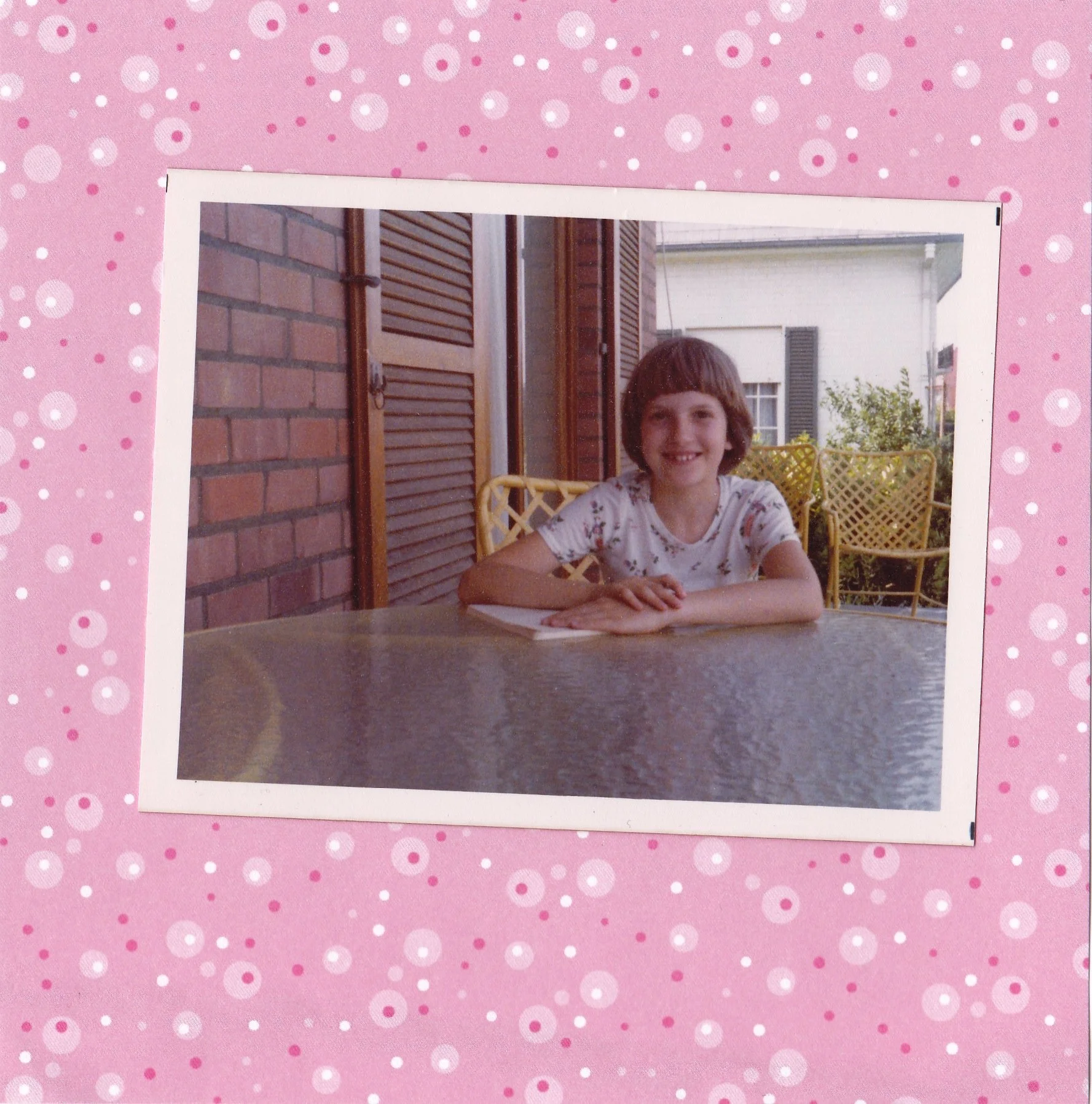
Lyn at nine years old, happily writing away
There’s a picture of a nine-year-old me—classic ’70s bowl cut, grinning as I sit outside at a patio table, my writing notebook spread open, pen poised to write. That is the me I cultivate daily. Not my Shoulda-Woulda-Coulda Adult self, who is tempted to resent the plot twists that don’t go my way. The woman who dwells only on what’s lacking rather than what’s resonating.
I’ve learned to name what I’m good at. You must identify your skill sets, the particular nuances and features of your voice, and what makes your writing “you.” Some writing coaches and English teachers can be overly critical, red inking your work until its unrecognizable. So now I’ve trained myself to find three positives for every negative.
What are three good things on this page of yours? Name them.
Shirzad Chamine, who innovated the Positive Intelligence method, speaks of how research proves that we’re wired for negativity (survival!). I found his work to be a “kindred spirit” bolstering my experience as an educator and coach. I truly believe we must counter the negative assessments we make of our own and others’ work by focusing on what’s already working and celebrating that first. Once we know our writing superpowers, we can build on that strong foundation and better harness critical feedback to improve our work.
To stay positive, you not only need to love and celebrate your own work, but you need to find people in a writer’s group, an agent, and/or an editor who will help you identify and celebrate your strengths as a writer.
What are some of the biggest setbacks you’ve faced in your career? How did you react?
Parting ways with three different agents was hard, every time.
The first time, I chose to part ways because the initial enthusiasm of the agent didn’t convert to clear directions about how to revise my manuscript. I realized I needed an editorial agent who could speak in directive specifics. And when I didn’t receive timely email communications, and had to follow up multiple times, I knew that my preferred communication style of responding within 72 hours was another nonnegotiable. As a college essay coach who works with up to 60 students a year (meaning I get multiple emails a day), that’s how I run my business. So I decided it was best to move on.
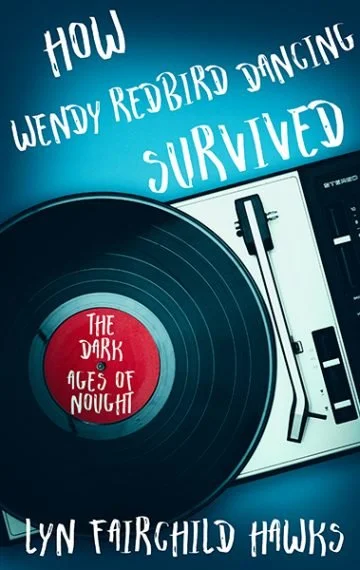
After that experience, I chose to indie publish my first YA novel, How Wendy Redbird Dancing Survived the Dark Ages of Nought, which had already won a James Jones First Novel semifinalist nod. It’s a book I still love, and I had lots of fun making a trailer, doing a blog tour, and doing signings. All of these experiences taught me a lot about what indie authors must do to share their work. Much gratitude goes to the Elizabeth George Foundation for funding all of this and my other indie works.
My second agent found me and another novel in the slush pile, right after I’d traveled to Chicago to pitch my manuscript at an agent conference. She did a great job giving editorial feedback (specific!) and she responded SAME DAY. (Omg, I was in love!) She subbed out my YA books Nerve and then No Small Thing when Nerve didn’t sell.
Then right as No Small Thing was going on sub, she had to quit the business.
I was surprised and devastated, even though I understood her choice. Something in me said, “Just keep going.” Two agents had once believed in my work, and I still believed in mine. So I queried again, about 150 agents, and found my third.
This agent gave me so much hope. She subbed No Small Thing out in multiple rounds, and she tried everyone she could. The spreadsheet of editors—her submission list—just grew and grew. She was relentlessly focused and encouraging, which gave me great hope. When No Small Thing didn’t sell, I wrote another book, When Pigs Fly. My agent took up the charge again with that book, and she was just as enthusiastic.
I should probably pause here to bring back the “Luck and Timing” theme: I write activist novels about teen journalists, girls’ sports, and grassroots organizers. The industry wasn’t exactly keen on these topics at the time I was querying, for a variety of reasons we don’t have room to discuss here.
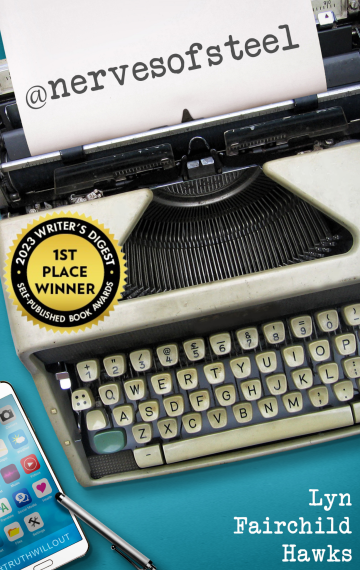
While we waited to hear back from editors, I took Nerve and released it as an indie novel: @nervesofsteel.
In fall of 2024, my agent and I had an honest conversation. It had been five years. She’d done her best. I’d done mine. We both agreed that we weren’t able to help each other move forward, and none of my new ideas I pitched were ones she felt she could sell.
A month later, I won the Book Pipeline prize. Besides a monetary award, Book Pipeline is also subbing out my work while I query. Meanwhile, When Pigs Fly (now titled Last Song for Cicada Creek) won various awards. It’s still on sub, and four agents have the full manuscript as I write this.
Also, competing with these three “losses” (and were they really? Or are they just the average author reality?) is the “close but no cigar” situation I had one time with an editor. The editor requested an R & R (Revise and Resubmit) for When Pigs Fly and then said the revisions were not what she’d hoped for. My agent and I had been super-hopeful and happy with the revisions (a six-month revision process).
After licking my wounds on that one, I turned to other writing projects and strategized with my agent about new submissions. I’m learning screenwriting and when I heard I’d made it into the Austin Film Festival Second Round, I was blown away. Screenwriting is a blast!
After parting ways with my third agent, I learned from other authors that they’d switched agents once, twice, three times. I learned how long the subbing and publishing process was for other writers. I began to feel less like a pariah and more like someone on a rollercoaster publishing journey. No judgment there; every path is different.
You lick your wounds, you rest, and you rise again.
If you could go back and give your younger self 1-2 tips, what would they be?
I would tell her that
· You will work harder than you can ever imagine.
· Each page you write must eventually be full of drive and forward momentum. That doesn’t necessarily mean wild action and plot twists. But there must be want and need and tension, always, for a page to turn.
· People will always tell you first what’s wrong with your writing. You must tell yourself first what is right.
What are the specific mental and/or physical habits you’ve worked to cultivate? What setbacks did you face while forming new habits and how did you overcome them?
· I write fiction first in the morning. My best writing hours are 7:30am – 10am. If I don’t carve this time out for myself, I get resentful of my other work, which I love. Sometimes I have to remind myself that it’s beautiful to put myself first. Not selfish. Not cold. Right! It’s taken a while to get my brain there, but it’s never too late! (Can you tell that the biggest obstacle to this habit is an insidious little voice telling me I ought always to put others first?)
· I exercise more because a brain doesn’t need to write 8 hours a day when it’s wired like mine. The biggest setback with cultivating a rich outer life (physical, spiritual, social, more) is when life is life-ing and things must be repaired (from cars to relationships). Then exercise doesn’t happen because all you have time for is repairs and writing. And the writing will “suffer,” it seems. But a rich and eventful life lived always helps the writing, even when it’s a trip to the mechanic to fix a flat. So I’ve learned to stop judging myself for not meeting a “writing quota” daily. I wake up to my words and do my best in the time I have.
What are you reading and loving at the moment? Are there any books or shows that are feeding your creative energy?
· Robert McKee’s Story: Substance, Structure, Style, and the Principles of Screenwriting
· Maggie O’Farrell’s The Marriage Portrait
· Annie Ernaux’s The Years
Do you have a personal mantra for 2026?
Release the outcome. Embrace the joy of the journey.
Lyn is Vermont College of Fine Arts MFA grad from the program in Writing for Children and Young Adults and a former high school teacher. As a GenX author, screenwriter, and educator, Lyn is committed to sharing the activist stories of Gen Z through TV, novels, and students’ own authentic storytelling. When she isn’t juggling her WIPs, she’s a college essay specialist who gets to help 17 year-olds tell their authentic stories in applications. Lyn lives with her partner, country musician Greg Hawks, in Chapel Hill, NC.
Ready to meet your writing goals in 2026? Sign up for my free newsletter and you’ll get a hefty dose of inspiration, optimism, and writing opps straight to your inbox each month. Click here to sign up!
